Amino Acids
Your Professional Amino Acids Supplier
Shaanxi Milo Biotech Co., Ltd is a global, technical innovation-led and ultimate services-based company professional in Nutrition, Health and Supplements.
why choose us
One Stop Solution
We are China's leading professional raw material supplier , providing customers with one-stop supply solutions from raw materials to delivery.
Quality Assurance
We strictly manage and test raw materials, and our products comply with international certification systems and standards.
Fast Delivery
We work with a range of logistics providers to provide our customers with fast, reliable, cost-effective shipping and distribution services, with delivery times typically being 1-2 weeks.
Sales Market
Our customers come from America, Europe, Asia and Australia. We support not only the world's top manufacturers, brands and distributors, but also small businesses and startups in these industries.


Amino acids are the building blocks that form one of the most important needs of our body; proteins. Amino acids are consumed in many ways by consumers who need it to build up their protein intake. Amino acids are the basic units that make up proteins, giving proteins a specific molecular structure and making their molecules biochemically active. Proteins are important biologically active molecules in organisms, including enzymes that catalyze metabolism.
Benefits of Amino Acids
Enhance Muscle Recovery and Increase Mass
Leucine, isoleucine, and valine are branded-chain amino acids (BCAA), referring to their structural composition. When you take these amino acids along with other essential amino acids, they have significant benefits for muscle growth, metabolism, and recovery.
Maintain Healthy Hair, Skin and Nails
Our bodies use the amino acid threonine to produce collagen and elastin. Collagen and elastin are essential proteins for the structural integrity of our connective tissues.
Promote Cognitive Function and Balance Moods
Two amino acids-tryptophan and phenylalanine-are instrumental in producing neurotransmitters that influence cognitive function, mental health, and overall mood. Neurotransmitters are chemicals produced in the brain that send messages throughout the body to ensure it functions well.
Strengthen Immune Function
Various amino acids are vital nutrients for immune cells, with each essential amino acid performing different functions to strengthen your immune system.
Amino Acids Types

Essential amino acids
These are amino acids that cannot be synthesized by the body and must be obtained from the diet. There are nine essential amino acids for humans: histidine, isoleucine, leucine, lysine, methionine, phenylalanine, threonine, tryptophan, and valine.

Non-essential amino acids
These are amino acids that the body can synthesize on its own, thus not required to be consumed through the diet. Examples include alanine, asparagine, aspartic acid, and glutamic acid.

Conditional amino acids
These are amino acids that are usually non-essential but may become essential under certain conditions, such as illness or stress, where the body's demand for them exceeds its ability to produce them. Examples include arginine, cysteine, glutamine, tyrosine, glycine, ornithine, proline, and serine.
Application of Amino Acids
Pharmaceuticals
Amino acids serve as the foundation for synthesizing pharmaceuticals. They are used in the production of antibiotics, vaccines, and various medications. For example, antibiotics like penicillin are produced from amino acids.
Medical applications
Amino acids have medical applications beyond pharmaceuticals. They are used in intravenous (IV) solutions for patients who cannot consume nutrients orally. Amino acids are also used in wound healing and tissue repair.
Food industry
Amino acids are used as flavor enhancers and additives in the food industry. Monosodium glutamate (MSG), derived from glutamic acid, is a common flavor enhancer. Amino acids also play a role in fermentation processes, such as in brewing and winemaking.
Cosmetics and personal care products
Amino acids are used in cosmetics and personal care products for their moisturizing and conditioning properties. They can help improve skin texture, promote hair health, and enhance the effectiveness of skincare products.
Agriculture
Amino acids are used in agriculture as fertilizers to improve soil quality and promote plant growth. They are also used in animal feed to enhance growth and productivity in livestock.
Biotechnology and research
Amino acids are essential in biotechnology for protein engineering and the production of recombinant proteins. They are also used as markers in biochemical research and as standards in analytical chemistry techniques like chromatography.
Amino Acid Analysis Methods
Reverse Phase High-Performance Liquid Chromatography (RP-HPLC)
RP-HPLC is a widely employed method for amino acid analysis. It utilizes a stationary phase with hydrophobic properties, separating amino acids based on their hydrophobicity.
Liquid Chromatography-Mass Spectrometry (HPLC-MS)
HPLC-MS combines the separation power of HPLC with the mass analysis capabilities of mass spectrometry. This tandem technique allows for not only the identification but also the precise quantification of amino acids.
Gas Chromatography (GC)
GC is a technique that separates amino acids based on their volatility. In this method, amino acids are vaporized and carried through a column by an inert gas, with separation occurring based on their retention times.
Gas Chromatography-Mass Spectrometry (GC-MS)
GC-MS integrates the separation capabilities of GC with the mass analysis precision of MS. This method is well-suited for the identification and quantification of amino acids in volatile and semi-volatile samples, providing enhanced sensitivity and specificit.
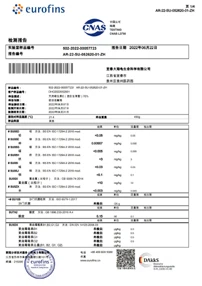
Our Certificates